‘Dogs Talk...if we learn how to listen‘
Helen Jones-Florio, Canine Body Language Coach
Understanding the Secret Language of Dogs
We have had family dogs since the day I was born. Growing up, and eventually having my own dogs, I thought I knew a thing or two about them. Back then, it was a case of, “Dogs are just dogs, right? They eat, sleep, run around, do as we tell them, occasionally fight with other dogs… .” The word ‘communication’ wasn’t even a blip on the radar. However, looking back, I deeply wish I had known then what I know now about these beautiful four-legged friends we are honoured to share our lives with.
I have since learned that dogs communicate through a complex combination of signals – not just to us, but to one another. Their behaviour is also intensely contextual, meaning a single movement can completely change its meaning depending on what is happening around them. For example, subtle signals like a yawn, a lip-lick. or a head turn often appear long before a situation escalates into a growl or a bite. The secret to a happy, safe relationship lies in learning to “read” this silent language and seeing the world through your dog’s eyes.
What is ‘Canine Body Language Coaching’?
First and foremost, “Walk & Learn” sessions are not dog training classes. Unlike traditional obedience classes that focus on teaching cues like ‘sit’. ‘stay’, or ‘heel’, my bespoke one-on-one sessions are dedicated entirely to how dogs communicate through their unique body language.
“We can learn the language of dogs in order to communicate better, have a better relationship with our dogs, and to do a better job at teaching them and bringing them up” Turid Rugaas – ‘On Talking Terms with Dogs’
Learning to read canine body language is the essential foundation that all effective training is built on. Because communication and behaviour are so closely linked, uncovering the ‘why’ behind your dog’s actions builds a deeper layer of trust and and profoundly strengthens the bond between you. Ultimately, understanding your dog’s needs, emotions, and silent intentions makes daily training and life together much easier.
“To understand behaviour, we have to ‘listen’ to what dogs are saying before they even make a sound.” Helen Jones-Florio
“Walk & Learn” provide you with an invaluable opportunity to learn with your eyes and observe how your dog expresses their emotions in real-world situations. Every dog is an individual with their own distinct personality, history, experiences, and subtle ways of expressing themselves. Therefore, our sessions are completely tailored to decoding your dog’s individual vocabulary. While our primary focus is observation, there will naturally be plenty of crossover advice and practical force-free tips during our walk on how to support your dog and handle real-time situations with knowledge and confidence.
The sessions are a completely judgement-free zone. Whether your dog has a history of *reactivity or you’ve struggled with certain situations in the past, all are welcome. To me, there is no such thing as ‘misbehaviour’— only communication that may have been misunderstood. To help me get a clear picture of your dog before we meet and maximise our time together, I will ask you to fill out and return a short consultation form prior to our session.
This deep-rooted belief that ‘misbehaviour’ is simply misunderstood communication didn’t just come from books—it was forged during my time in West Africa, living with street and beach dogs… who also happen to be the inspiration behind ‘Dogs Talk…if we learn how to listen’.
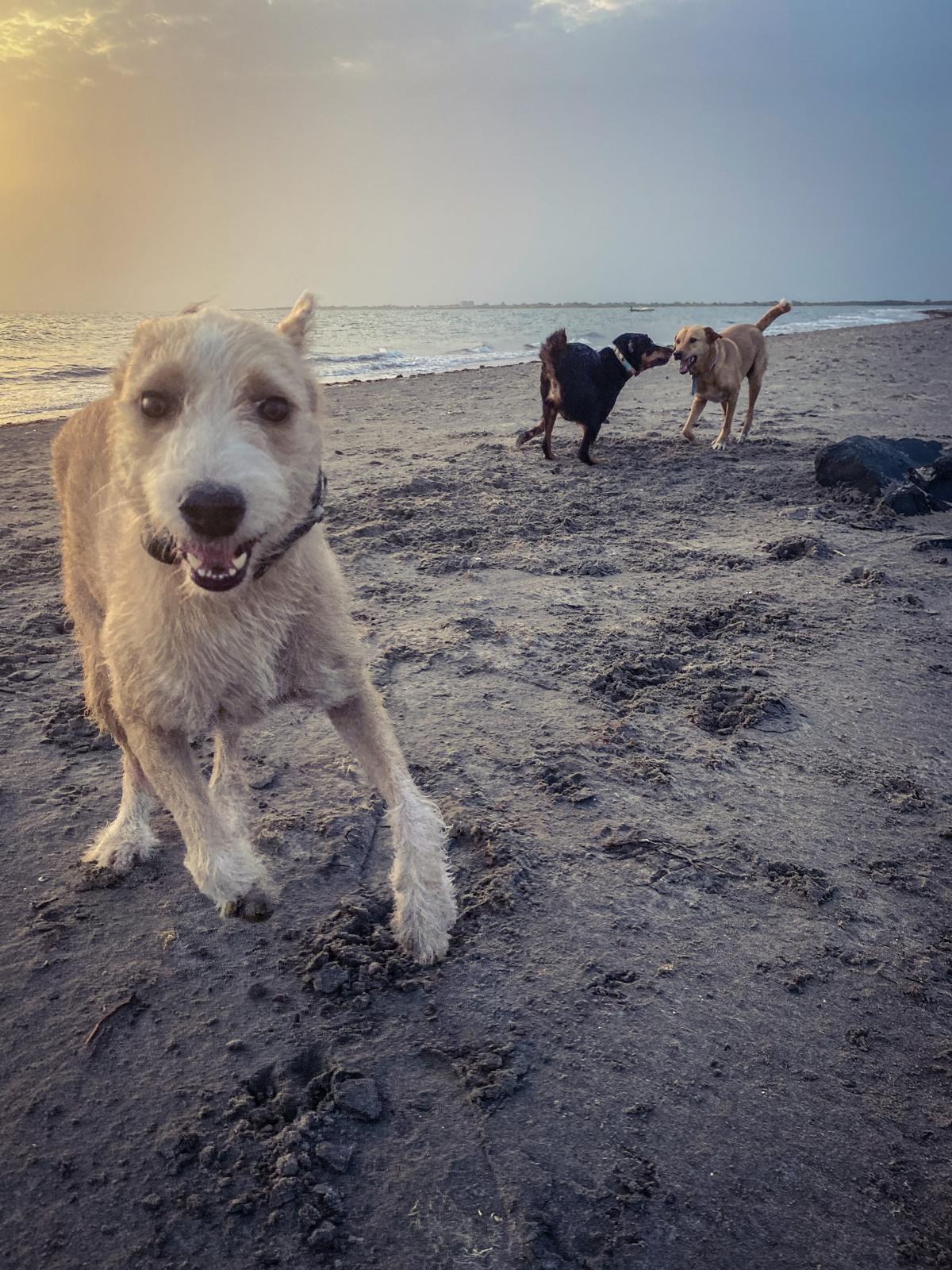
How a free-ranging beach dog brought me back from West Africa to “Walk & Learn” sessions
The Gambia Edge:
My journey into the world of dog behaviour didn’t start in a classroom; it started on a beach in The Gambia, West Africa.
This is where I met ‘Dexter’. He spent the first three years of his life fending for himself, navigating the high-stakes reality of survival. Dexter, along with a pack of other sweet free-ranging strays, eventually found his way from the nearby beach to the house we lived in. A quick, highly deserved, huge thanks to an extraordinary woman, and our good friend, Heather Armstrong (MBE), founder of The Gambia Horse and Donkey Trust charity organisation, whose house we lived in all those years. Although, the charity really ought to be renamed to The Gambia Horse, Donkey, Dogs, Cats, Camels, Hyenas, Monkeys…you get the picture. Please do check out the incredible work they do at GHDT.
Dexter Dog Travels: Banjul-Paris-London. Planes, trains, and automobiles
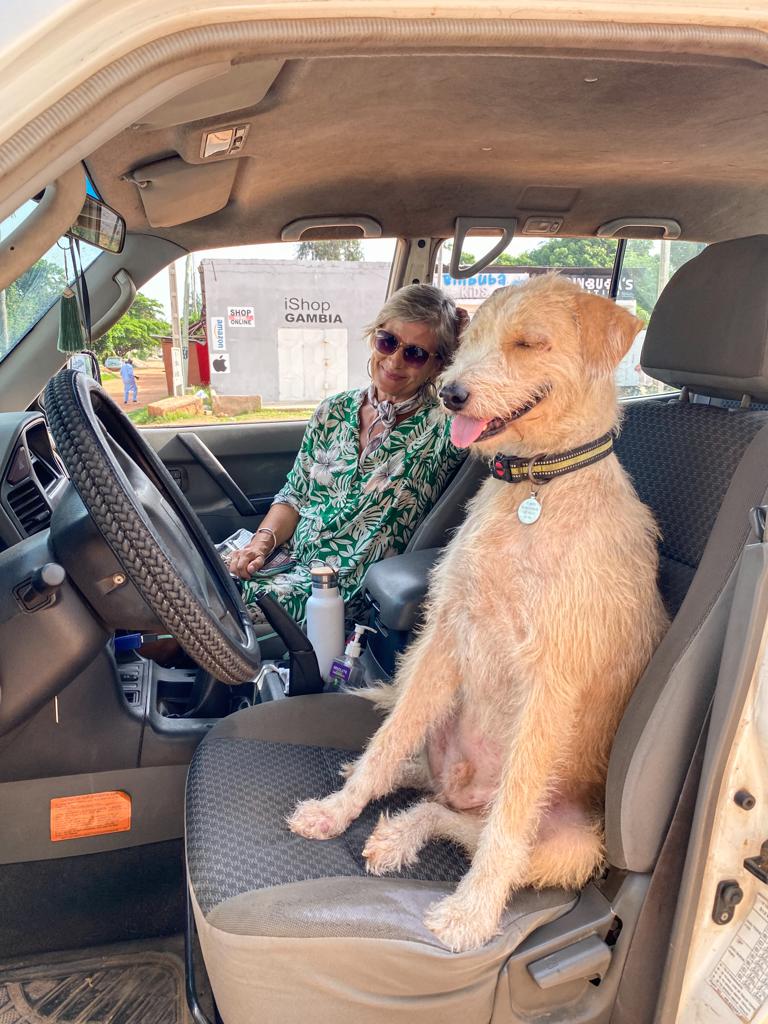
For almost ten years, we had the privilege of living with and caring for these free-ranging dogs. The dogs came and went as they pleased, and observing them in their natural state gave me a perspective most canine behaviour consultants never have the opportunity to see. I watched newcomers like Dexter navigate the pack with wariness, often needing time and space to adjust. I saw the “bravado” of the bold, the desperation of those hungry enough to venture into an established pack, and the literal scars of those who had to fight to find their “family.”
Why We Need to “Listen” with Our Eyes
When I returned to the UK in 2022, I began my formal studies in canine behaviour to back my years of field experience with professional qualifications. But my core philosophy remains the same: to understand behaviour, we have to “listen” to what dogs are saying before they ever make a sound.
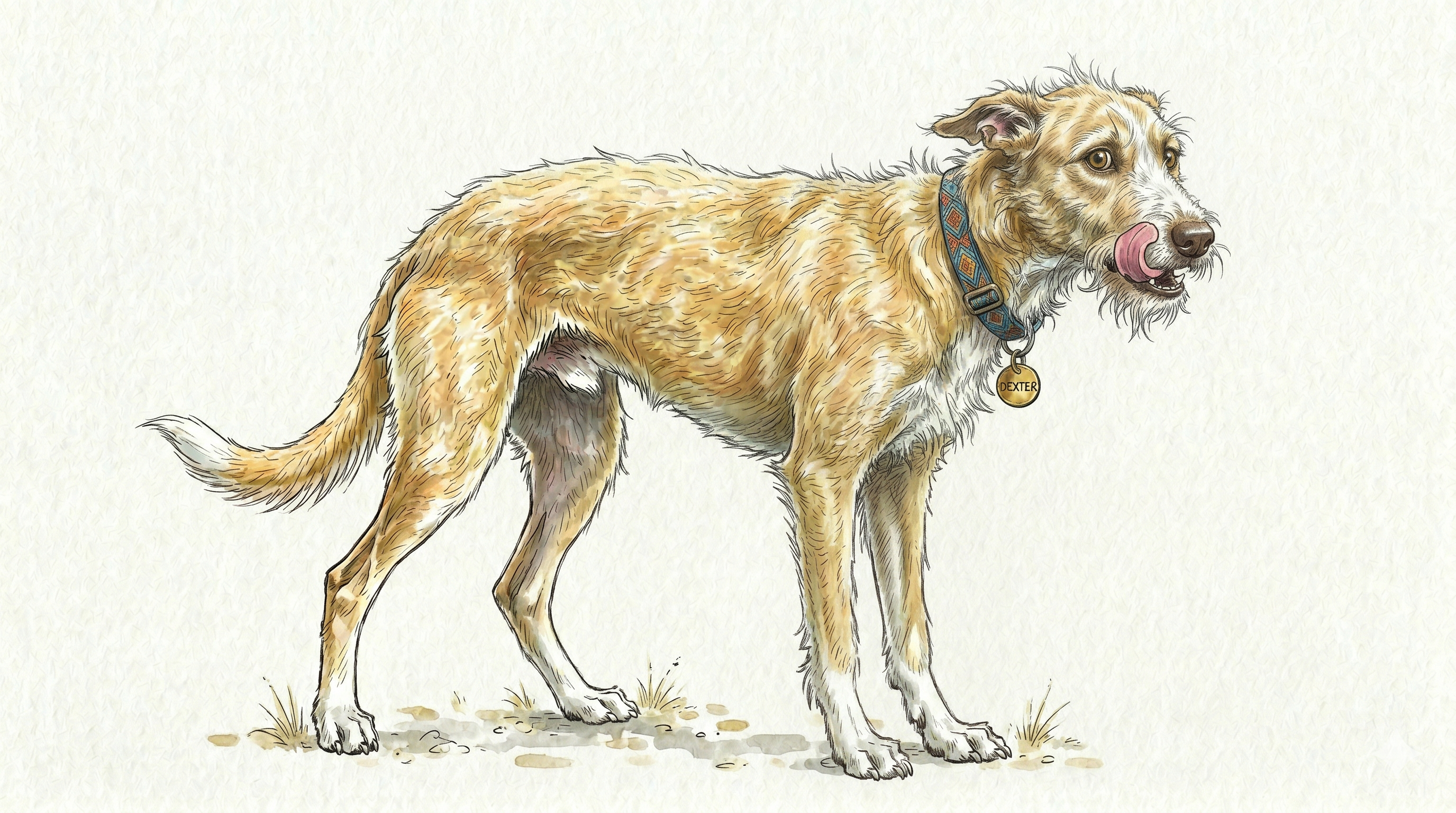
The lip lick is a self-calming mechanism. A subtle, non-verbal signal often used to communicate anxiety, stress, or discomfort when a dog feels unsure of their environment. It can also be ‘displacement’ or ‘appeasement’ behaviour. Often accompanied by, for example, yawning (when not tired), averting gaze (looking away), or pacing
Most people see a wagging tail and assume happiness, or a cowering dog and assume past abuse or “guilt”. But the truth is more nuanced. Dogs are often “shouting” in silence long before they resort to a bark or a growl.
My mission is to teach you the language of dogs so you can:
- See the Unseen: Spot subtle signs of stress or joy before they escalate.
- Advocate with Confidence: Know exactly when your dog needs space or guidance.
- Build True Trust: Replace guesswork with mutual respect and a deeper bond.
How We Can Work Together
For the Grown-Ups & Kids
I offer bespoke “Walk & Learn” sessions designed to help you and your family become confident in “dog speak”. By bridging the communication gap, we move away from guesswork and toward a relationship built on genuine, two-way trust.
“Walk & Learn” Sessions: There is no better classroom than the real world. During these sessions, we’ll walk with your dog(s) in a *real-world environment. I’ll help you narrate what your dog is “saying” in real-time, helping you understand their personality, their triggers, and their joys.
COMING SOON! For the Young Explorers (Ages 6–11)
Interactive Flashcard Sessions: Using my custom-designed “Dexter” flashcards, I teach children how to read a dog’s emotions. With an image on the front and a description on the back, these sessions make learning dog safety and body language fun, engaging, and memorable.
FAQs, Pricing & Contact Details
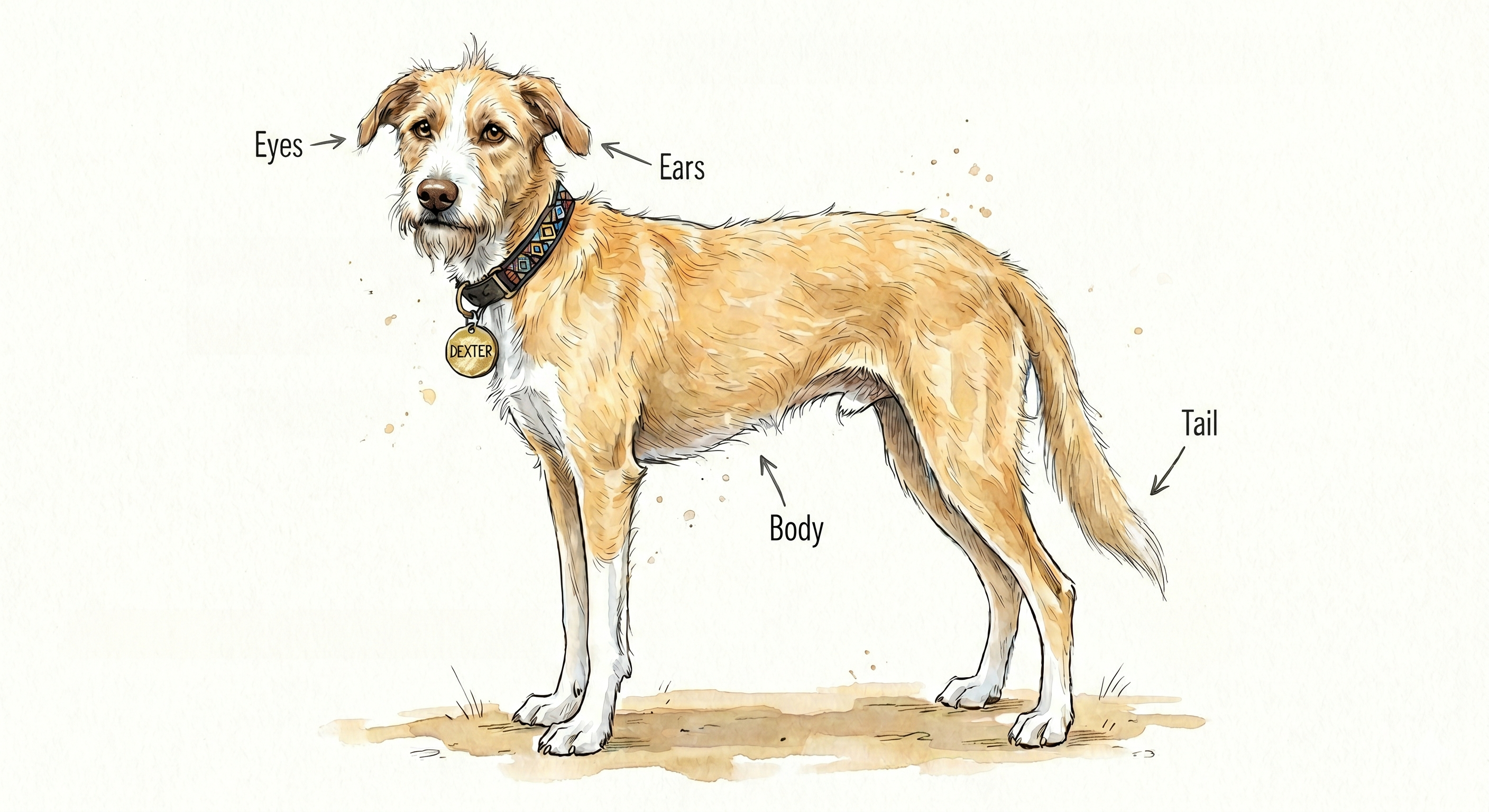
Read the whole of the dog’s body language: facial expressions, ear position, tail carriage, and posture
The Golden Rule: Read the Whole Dog
In every session and on every flashcard, I emphasise one vital principle: Never look at a single signal in isolation.
Always look at the whole dog + environment
To truly understand a dog, we must look at the “Whole Picture”:
- The Context: Where are you? Who or what is nearby?
- The Individual: Age, health, breed, and past experiences (like Dexter’s) all matter.
- The Body: From the flick of an ear to the tension in the tail—it all tells a story.
- The Health: Sometimes, “bad” behaviour is actually a cry for help regarding pain.
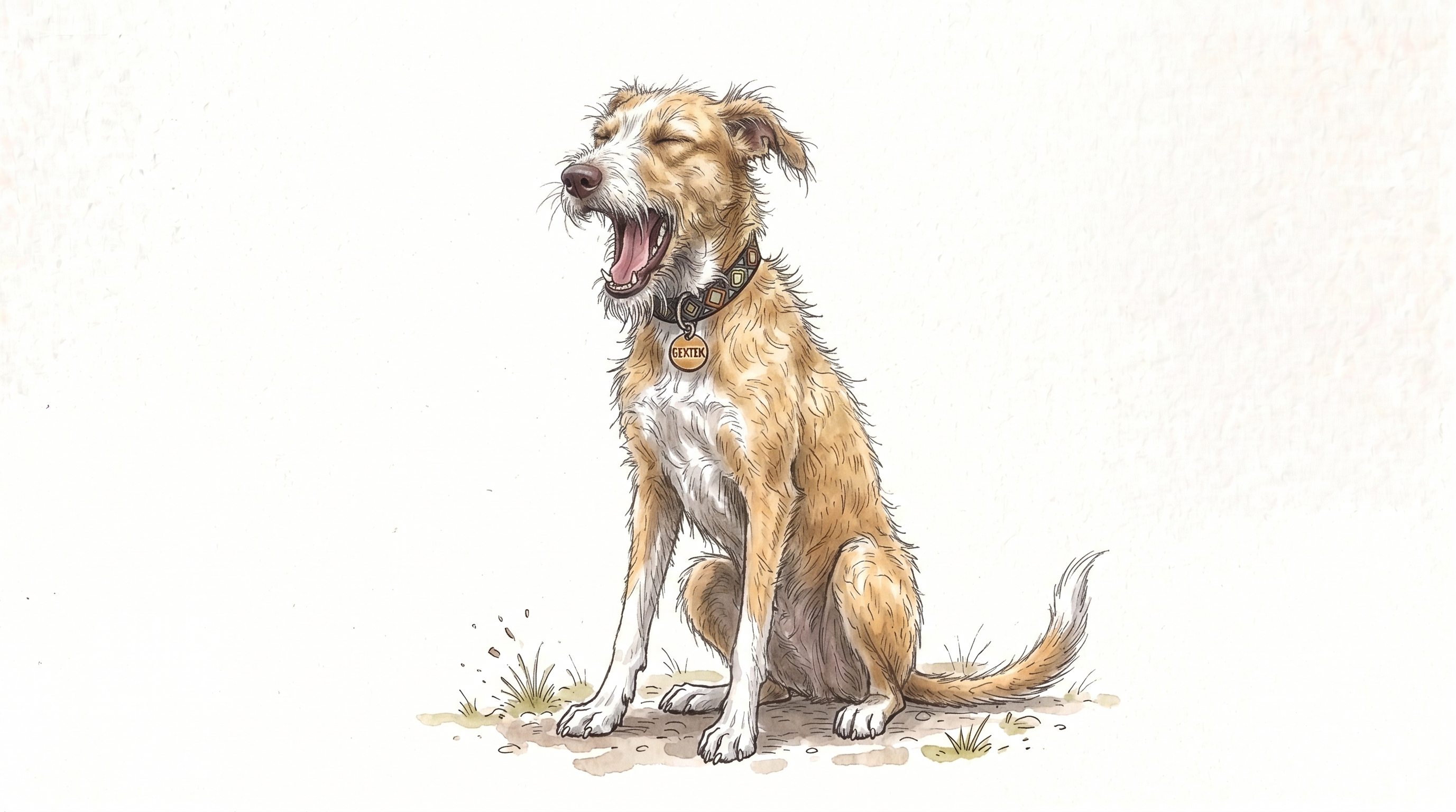
Yawning out of context: self-calming mechanism. A subtle, non-verbal signal often used to communicate anxiety, stress, or discomfort when a dog feels unsure of their environment. It can also be ‘displacement’ or ‘appeasement’ behaviour. Often accompanied by, for example, lip licking, shaking off (when not wet), or averting gaze (looking away)
Whether you have a rescue with a complex history or a new puppy, let’s work together to see the world through their eyes. All breeds, mixes, ages, and sizes are welcome.
Ready to Decode Your Dog’s World?
A quick reminder: “Walk & Learn” sessions are designed to help you listen with your eyes. While we won’t be focusing on rigid obedience cues, understanding the true “why” behind your dog’s actions naturally makes daily life easier and deeply strengthens your bond. You will walk away with practical, force-free tools to support your dog through real-time situations with knowledge and confidence.
I look forward to walking, learning, and, most importantly, “listening” with you and your dog.
Helen Jones-Florio
Canine Body Language Coach
FAQs, Pricing & Contact Details
*Safety is key: For those with dogs who may be, for example, nervous or reactive I can suggest secure field locations that you, the client, can book in advance. Secure fields can be especially beneficial if you want the “Walk & Learn” session to be off-lead, to enable both you and your dog to get the full benefit of the session.

[Insert Dexter Illustrated Images Here]
My Qualifications & Training
I believe in lifelong learning to ensure I am providing the most up-to-date, science-based support for you and your dog. My approach is rooted in positive reinforcement and a deep respect for canine welfare.
Compass Education: Diploma Level 3 Diploma in ‘Foundation of Canine Behaviour’ (Distinction)
IMDT (Institute of Modern Dog Trainers): Level 3 Certificate in ‘Learning, Motivation, and Reinforcement’
– Certificate in ‘Learning Theory Explained’
– Certificate in ‘Breed and Predatory Motor Patterns’
Canine Principles: CPD Certificates in ‘Dogs and Children’- and ‘Loose Lead Walking’
Dog First Aid Surrey: Certificated in Canine First Aid
📚Current studies (2025-2026): Advanced Diploma in Applied Animal Behaviour (Canine) – Level 5. Focusing on positive reinforcement to improve behavioural, social, communication, and learning skills. Using behavioural principles to set goals, reinforce behaviours, and measure outcomes.
Fully insured – Public Liability (link to Session Fees & FAQs)
To find out more about my other work, as a photographer/filmmaker, hop over to our ‘About’ and ‘The Art in Dog Photography’ pages.
Social Media #DexterDogTravels
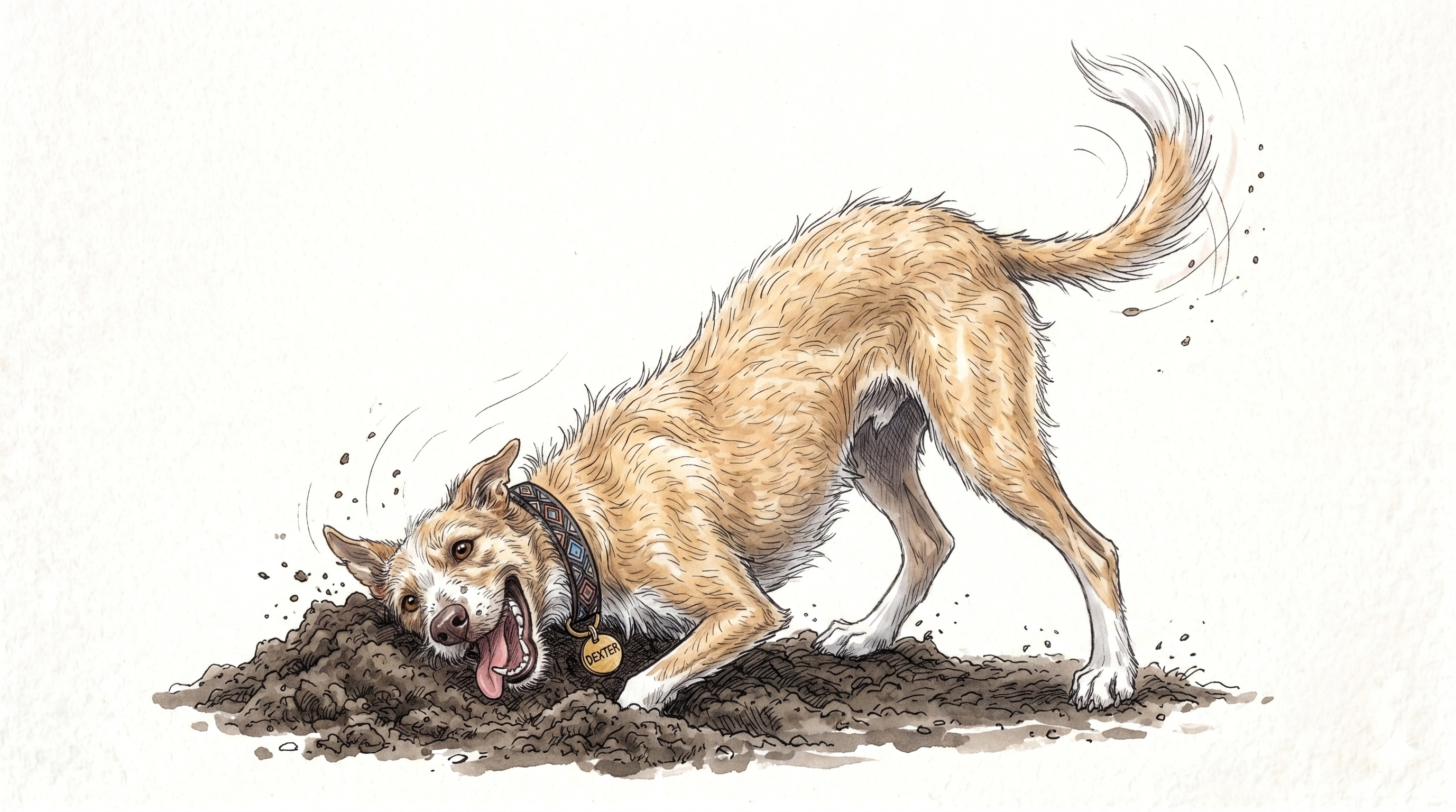
Rolling in something smelly!
Dogs often roll in other animals’ poop because it may be an instinct inherited from their wild ancestors, possibly to disguise their own scent or to carry interesting smells back to their group. Or, because it’s great fun, smells really amazing, and, it could be the canine equivalent of putting perfume on!

