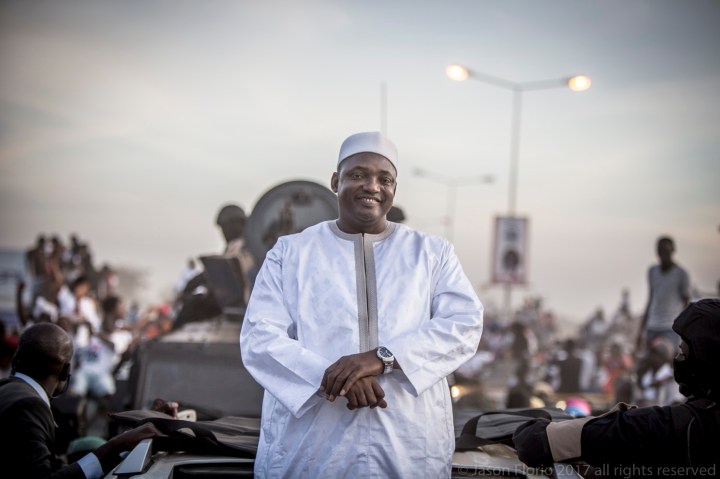
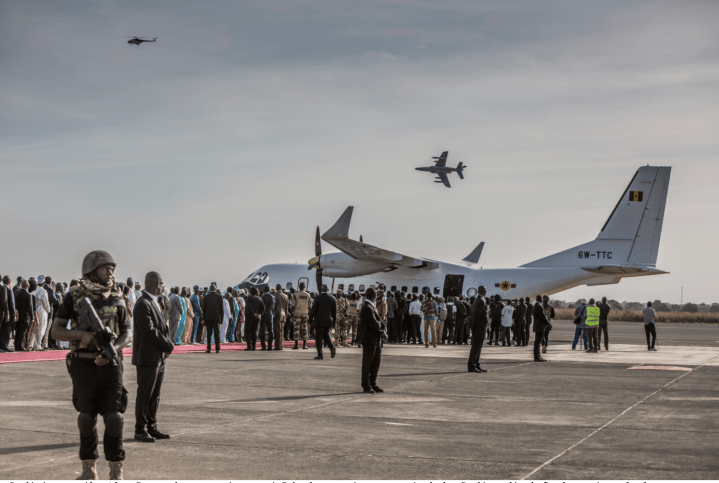
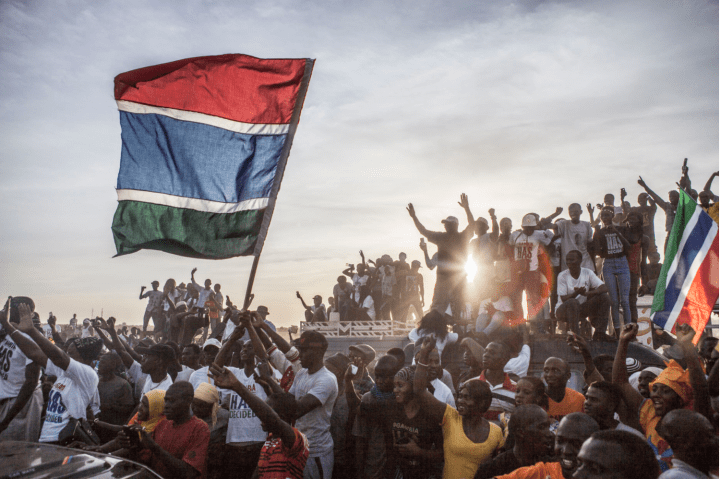
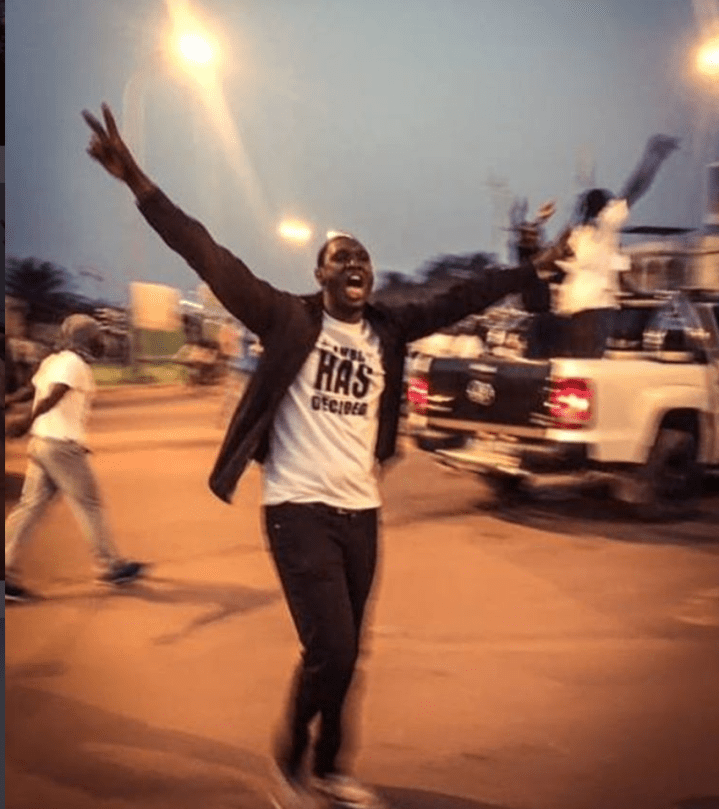
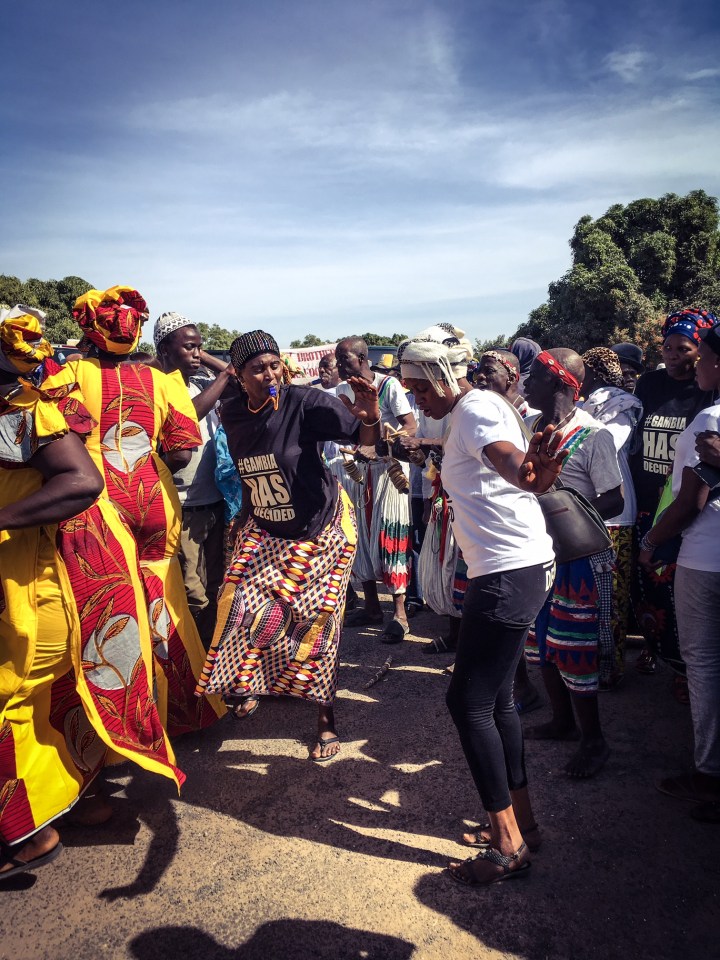
A triumphant and momentous day for The Gambia, West Africa. Ten’s of thousands of euphoric Gambians lined the streets for miles – and miles! (an estimated over 100,000 Gambians flocked the main road) – to welcome home their new president, Adama Barrow. Due to potential security risks, Barrow had briefly exiled himself to neighbouring Senegal, where he was inaugurated at the Gambian Embassy, Dakar.
Aside from the more serious element to our work – particularly, what we are working on at the moment, ‘Gambia – Victims and Resisters of a Regime‘ #Portraits4PositiveChange – we have also been working on another long-term series of the traditional masquerades of The Gambia.
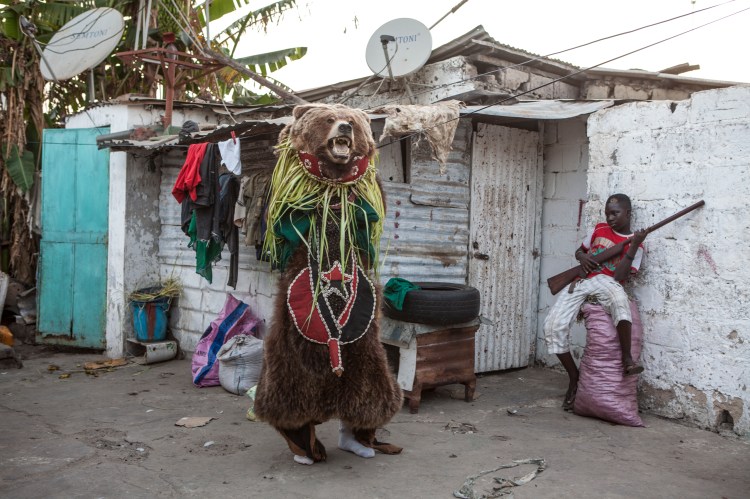
Although the Gambia is a predominantly Muslim country, the animist-fuelled masquerade ceremonies pre-date the arrival of Islam and are still tolerated and practiced around the country. Animism is an intriguing subject – the belief that animals and inanimate objects, such as trees, possess a soul, or a spiritual essence.
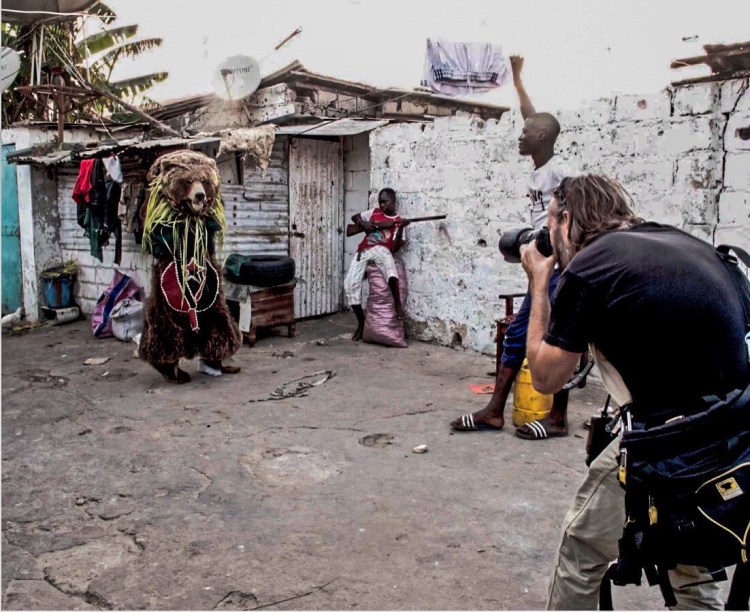
Also, the juxtaposition between the urban environment and these ancient traditions is fascinating – just like ‘The Hunting’, pictured, in the concrete and corrugated iron enclave of a compound in the capital city of Banjul.
Whether it be a circumcision ceremony, celebrating a successful harvest, chasing away evil spirits, enforcing village rules, or simply for entertainment, each particular masquerade plays a central and significant role in many parts of West African society.
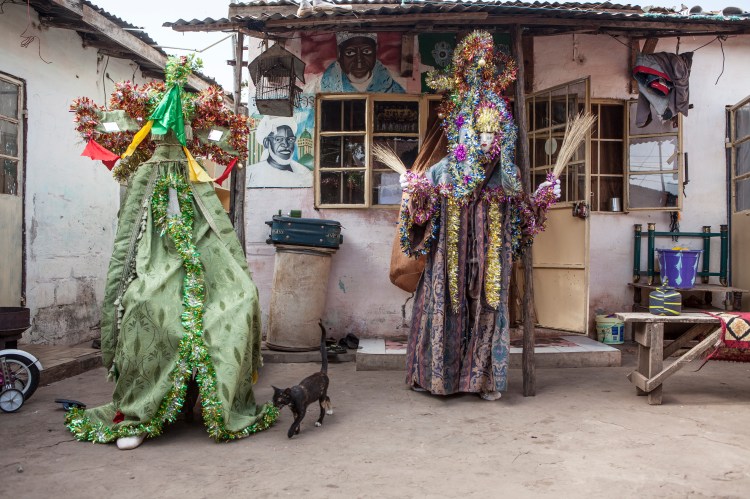
Most of the masquerades we’ve seen so far are based on animals. However, the traditions are being hauled into the 21st century, modernised by the use of synthetic fabrics and ornaments, such as Christmas tree baubles, adorning ‘new-style’ masquerades. However, more on those particular masquerades as we move on with the long-term project (sneak preview, below).
Gambia documentary screening at Pan African Film & Arts Festival – We are honoured to have ‘We Never Gave Up – Stories of Courage in Gambia‘, made for Amnesty International, chosen to be shown in its entirety at the 27th PAFF, Los Angeles, CA, February 7-18, 2019 (screening times to be confirmed)
We believe film and art can lead to better understanding and foster communication between peoples of diverse cultures, races, and lifestyles, while at the same time serve as a vehicle to initiate dialogue on the important issues of our times. PAFF.
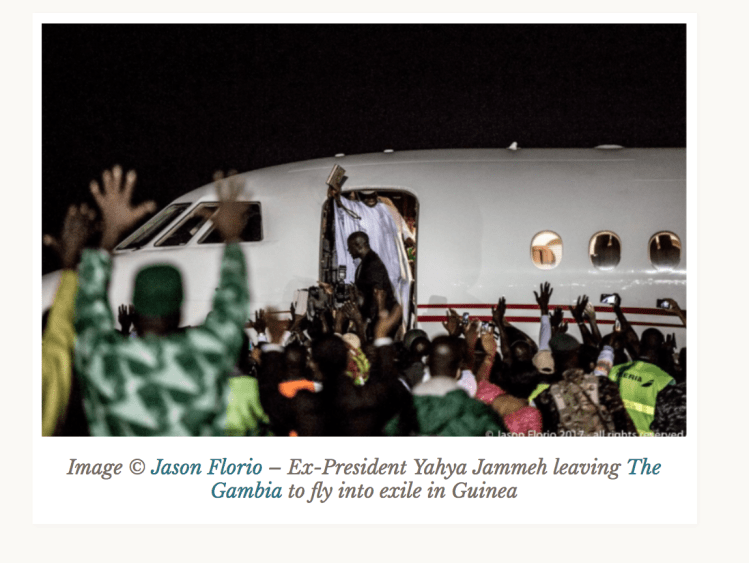
With Jammeh’s 2016 election defeat, he went into exile after a standoff with regional forces, and the victims of his regime started to come forward.
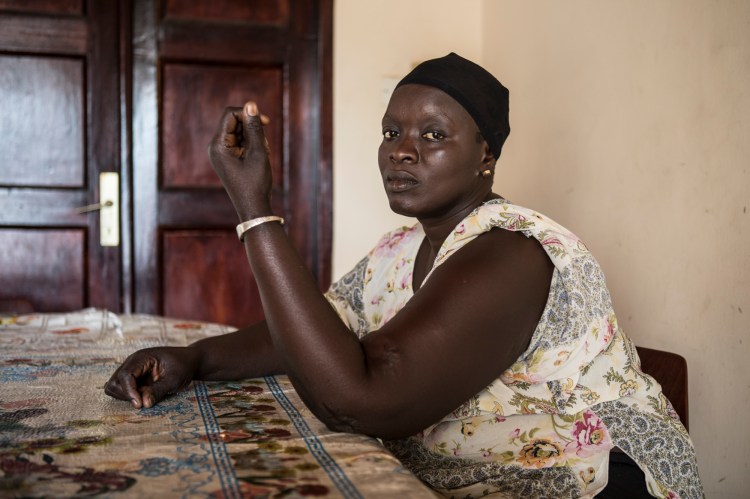
So far, over 1000 victims and their families have registered with the Gambia Centre for Victims of Human Rights Violations to share their stories and help build international support to bring Jammeh to justice
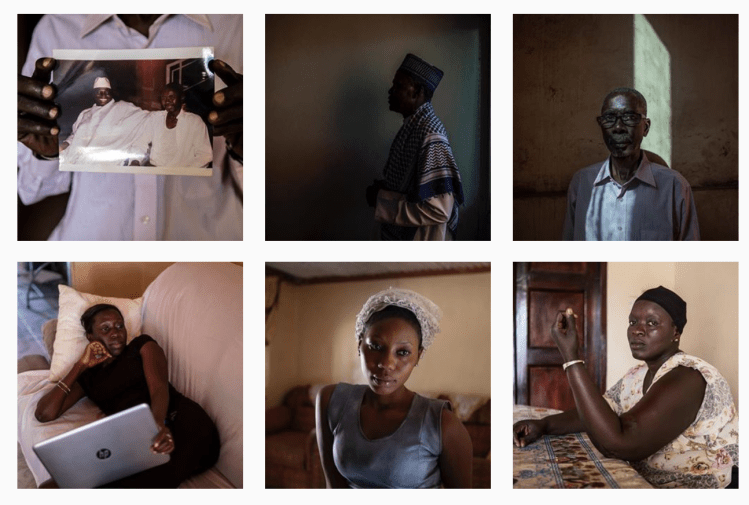
We’ve been busy these last couple of months, working predominantly on the portraits of victims and resisters in our second home of The Gambia. This is a work-in-progress, which we began two years ago. We also got asked to make a documentary for Amnesty International, which should be available to view in its entirety next month. See the trailer on our Vimeo page.
Along with making the portraits, we are filming the testimonies of all the victims and resisters of the Yahya Jammeh 22 year regime. More on this at a later date.
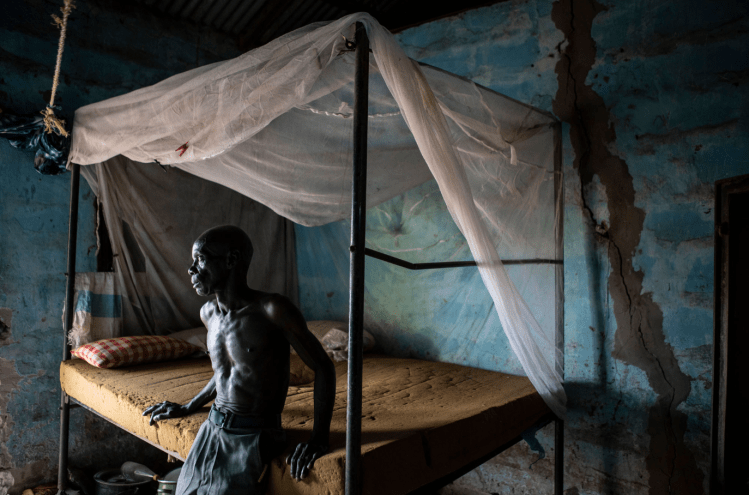
Dodou Sanyang in the room of his recently deceased mother. She was one of over a thousand elderly people abducted on the order of the former president, Yahya Jammeh in 2009. Groups of Jammeh’s paramilitary troops along with his youth brigade, The Green Boys and ‘magicians’ from Guinea went from village to village as part of a nationwide hunt for witches.







 PHOTOS TELL STORIES - documentary | filmmaking | photography | people | travel